Archive for the ‘My Life in the Kingdom’ Category

For Mike, Three Years Later

“Sandcastles Between the Tides of Sorrow and Time”

–by Richard Beck (shared with permission)

This is the end of theology.
The end of speaking
words into the air,
pretending that these syllables
gave us traction
and marked our progress.
Looking back,
we never moved.
There was only a babel filling
the intervals between our suffering.
Hastily constructed sandcastles
between the tides of sorrow and time.

Our sentences will continue
adding to the chorus of life
of crickets, wolves, and the birds of springtime.
The sounds and calls we make
to know we are not alone.
But this place will remind
with the deep ache of memory
that all doctrine has been reduced
to the singularities and wreckage of faith–
Only silence.
Only tears.
Only love.

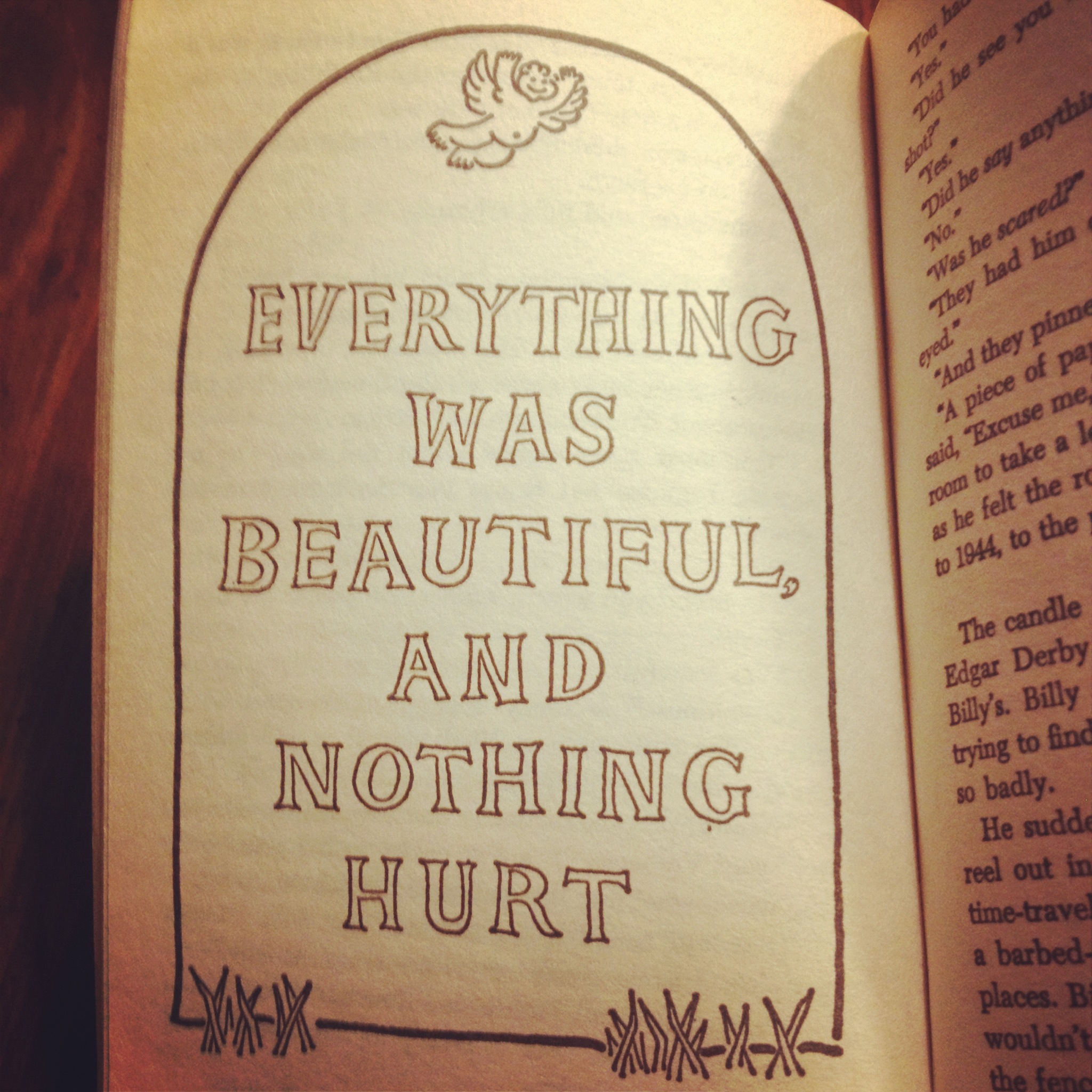
“Everything Was Beautiful, and Nothing Hurt.”

As a member of Christ’s body, what do you do when it is your turn to suffer?

I can only answer for myself, but usually, I am blindsided by suffering.  Stunned.  Suffering knocks off my spiritual “game face” and leaves me scrambling to figure out what just happened.  It’s as if someone abruptly threw me in a body of water that I didn’t even know was there, and so I have to first spend some precious seconds figuring out what is going on, where I am, and which end is up.  There is blind panic and immense disorientation and flailing, and when I finally haul my soaking, drowning self to shore, I spend a good amount of time heaving onto the sand while wondering what happened to all those things I was carrying with me when I was tossed into the sea.  And then, faith bobs to the surface (thank God–it floats!), and love pops back up, as well.  But so much else–so many hopes and dreams, so many plans for the future, even so many cares and concerns–sit heavy on the bottom of the sea, never to be seen again.

And as I lay, gasping, on my back, still trying to get my head around what just happened, I am faced with two very different temptations.  One is to never get up, to just curl up into a ball and stay on that shoreline, mourning what I lost.  That’s a real temptation, but only for a little while.

The other temptation is to get up, dry off, and pretend that being thrown into the sea wasn’t such a big deal.  After all, I’m a Christian, right?  No matter what happens on earth, I have a hope and future, right?  And I have faith that everything is going to be made right in the end,  and faith in an all-powerful God…right?  Well, if I have faith, then why should I mourn?  After all, this life is just a breath, and soon I will be in front of God and everything is going to be made new and whole.  And when I face God, I will be able to say that my faith stayed strong throughout my life, that it kept me from “mourning as the world mourns.”  I will be able to say that I never waivered, that I soldiered through this life, and that, because of my faith,

“Everything was beautiful, and nothing hurt.”

The only thing is…that’s not true.

Everything wasn’t beautiful, and sometimes it hurt a lot.

And that “everything was beautiful” line is certainly not from the Bible; it’s from Slaughterhouse-5, a book that is very different from the Bible.  But the one thing Slaughterhouse-5 has in common with the Bible is that they both explore just how much life can hurt sometimes.

And then I realize that the temptation toward that second reaction is just that…a temptation.  It is a temptation to sidestep the path that God has let me walk.  It’s a temptation to try to avoid the pain, when really, what I should do is to embrace the pain, just as much as I embrace the joy and the peace and the love.  To embrace is not to wallow, but simply to accept that this is my life right now, and to see how God is going to get me through it.

That is very important.  I must remember how it feels.  I must remember how God got me through it.

It is important because as a member of the body of Christ, my pain is not my own, to wallow or ignore as I see fit.  No, I have to walk the paths of pain God gives me because after (or even during) the experience, I know that God will use that pain to help others.  I know this first of all, because Paul told me as much when he said this to the Corinthians: Praise be to the God and Father of our Lord Jesus Christ, the Father of compassion and the God of all comfort, who comforts us in all our troubles, so that we can comfort those in any trouble with the comfort we ourselves have received from God.”  But I also know it from experience.  See, since I’ve had a few instances of deep pain, I now know about the unspoken “pain directory” that is a part of body of Christ.   It’s not a directory that is written down anywhere, but it is ever-present in the hearts of the other members of the body.  Simply put, when a member of the body suffers, the rest of the body does two things:  they comfort them as best they can, and they file their pain away for later.  For example, when my brother died, my name was filed away in the church’s pain directory under:

  • death of a sibling
  • mental illness

And since then, others who are experiencing this kind of pain either know that they can come to me, or are even directed to me by someone else.  It’s not that I have all the answers; it’s just that I’ve been there.  And when people are suffering, they want someone who has been there.  And I really, really want to comfort those people.  Usually, it happens just by listening and empathizing.  But sometimes I am able to tell them something, give them some morsel of hope that God has given me, and it helps them.  And that’s what I think Paul was talking about in his letter to the Corinthians.

Going through these experiences has taught me how important it is to experience and even embrace pain.  I can’t help anyone if I’m too busy pretending that everything is beautiful and nothing hurts.  And I can’t help them if I’m too wrapped up in my own suffering to see past myself (although that is an inevitable phase of pain, and sometimes it lasts longer than others).  Instead, my understanding of the directory of pain spurs me on to really study my pain, to feel it as thoroughly as I can, to pour out all my hurt and my questions and my anger to God…and to see where that leads me.

It always leads me somewhere.

And often it leads me to a place that is truly beautiful…even though it does hurt.

I Never Picture the End of February

I picture spring.  And Easter.  Warm weather and flowers.  And pretty skirts.

I picture summer.  And the pool.  The lake.  The beach.  The heat.  The long days, and the freedom.

I picture fall.  School starting.  Cooler weather.  Colorful leaves.  Halloween and Thanksgiving.

I picture winter.  Christmas, and all that comes with it.  New Year’s Resolutions.  Valentine’s Day.

And after Valentine’s Day, my mental pictures end until spring.

I don’t picture the end of February.

That means I am currently living in un-pictured days.

Days with no expectations, no anticipation, no mental images of what they will be like.

That means I didn’t picture the blessed warmer weather this year.

I didn’t picture the tiny, hopeful blossoms blooming in their best, most optimistic pink, on daring trees on campus.

I didn’t picture the large elephant sauntering past me, in all his rough, saggy glory, at the zoo the other day.

I didn’t picture sitting out on the glider in the warm sunshine, chatting with a dear friend from home about what God has been showing us during Lent.

I didn’t picture enjoying a fabulous story time at the downtown library with my favorite little girl in the world.

There have been so many unanticipated blessings, unforeseen gifts, un-looked for moments of happiness.

And they are nothing like I pictured.

Because I didn’t picture them at all.

Do you have any un-pictured blessings to share?

The Collectors of Suffering

“He was…a man of sorrows and familiar with suffering.”  Isaiah 53:3

“Come to me, all you who are weary and burdened…”  Matt. 11:28a

Is there any thing weirder than the prayer request session before Sunday school starts?

Really, guys.  I have been in tons of these things–lots of different classes and lots of different churches–and I have to say that from an outside perspective, they must be totally bizarre.  Just picture it from a stranger’s point of view:  people file into class dressed in the spectrum of clothing that constitutes “Sunday best.”  We sit and smile and laugh and joke and make sometimes awkward, often shallow small talk, chit-chatting about the weather and the ball games and the small illnesses that are going around.  The conversations consist of the safe stuff, the type of light banter that suits a group that consists both of lifelong friends and barely-acquaintances that make up a typical Sunday school class.  And then, the class is called to order amidst jokes of never starting on time (always a feature, no matter what class it is).  Next, it is suggested that we open with a prayer, and the class is asked if they have any requests.

It’s a neutral question:  prayer requests can be either happy or sad–or neither.  But generally, the prayer requests break down like this:  5% thanksgiving, 10% neutral concerns (safe travel, etc), and 85% suffering.  In just a few minutes span, the class’ conversation has shifted from breezy analyses of the latest basketball game to detailed descriptions of close friends’ cancer battles.  In a whiplash-inducing shift, the class puts away their happy, small-talk masks, and unearths all the troubles of their world.  News pours forth of terminal diseases, of biopsies and test results, of not knowing how much longer so-and-so has.  Requests are brought forward, sometimes with tears, for marriages that are crumbling, drug addictions that are destroying, job searches that are seemingly unending.  Often, these prayer request sessions go on for fifteen or twenty minutes, as if the dam has broken and more suffering keeps pouring through the breach.  It seems that everyone knows someone who is in some state of crisis–if they are not in the crisis themselves, which is also often the case.   Sympathetic groans and sighs fill the room as the tales of pain, and often death, are shared.  In short, we collect all the suffering that’s willing to be shared; we draw it out and present it all to God.

And then, we start class.

Can you tell me anywhere else, outside of group therapy, where that happens?  Maybe I don’t get out enough, but I can tell you that I never had any other class, or was a part of any other group outside of church where people set aside time to pour out their suffering to each other.  And what’s more, Sunday school classes (and whole congregations) often compile these prayer requests, and the good Christian is expected to revisit this liturgy of pain daily.  It is desired that at some point during our mundane routines of survival, we will pause and rehash this collection of suffering before God.

I think it is a really beautiful thing, perhaps one of the best things about church.

See, no one likes suffering.  We don’t want to suffer, and what’s more, we don’t want to think about suffering.  The human desire is to escape the idea of suffering as much as possible.  I’ve been struck lately by the degree to which even the music we listen to (besides Adele) and the movies and television shows we watch downplay suffering.  Kelly Clarkston thanks the man who broke her heart for making her “Stronger” in a song that assures listeners that they need not mourn even after an intimate relationship implodes.  Mission Impossible 4’s Ethan Hunt (as well as every other action hero in the movies or on television) takes beatings that should land him in the hospital, if not the morgue, but he faithfully emerges, no worse for the wear.  Even the bad guys have supernatural strength!

Because really, we don’t want to see our hero lying on the ground, crying, even if that’s what he should be doing.  We can barely stand the thought of people in real pain, and we don’t want that stuff around us.  I think that it is the human tendency to busily construct little bubbles around ourselves and our family, bubbles that keep all that suffering and misery safely out.  Even though the bubble is always perilously thin, we find its presence strangely reassuring.

Church pops our bubble. 

In church, you can’t escape suffering.  For one thing, we talk about it practically every time we gather.  For another thing, if someone in your church family is suffering, it’s definitely expected that you darn well do something about it.  When you are an active member of a church family, there’s no real option to turn your back on your suffering brother or sister.  I think about my parents’ church right now.  They have been hit with death after tragic death lately.  The news coming out of that beleaguered church is positively grim.  And even though none of the deceased is related to my parents, their lives have been transformed by the suffering of their Body.  Practically speaking, that means that their existence has consisted of way too many hospital visits, way too many meals cooked for grieving families, way too much time sitting and crying with bereaved family members, way too many funerals and visitations, way too many sorrowful Sundays.  And on an interior level, I know it has been hard on them.  After all, when your church suffers, you suffer.  It becomes a part of your life until the suffering passes.

Perhaps this all sounds pretty depressing.  Like I said, it is not our natural tendency to seek out suffering.  On the contrary, our default setting is to seek pleasure and avoid pain.  That’s just how we roll.  But it occurs to me that when we embrace the suffering around us instead of running from it, we are following the very steps of Christ.  He was after all, a man of sorrows and familiar with suffering.  Suffering didn’t scare him, which is why he could invite the weary and burdened to come to him and find rest.  To me, that means a disciple of Christ should be able to do the same thing.  We should not let our distaste for suffering cripple us; on the contrary, we should be able to open up our arms to those who are hurting, to carry their burdens alongside them.  Hurting people were drawn to Jesus.  They knew Jesus would not shrink away from them.  They knew he would see them, touch them, help them.  And so they came from everywhere, a parade of suffering, to see this man who could handle it.

And we are the body of Christ now.  And I know, I know we get a bad rap sometimes about how we treat hurting people, and some of it is deserved.  But I also know that I have been blessed my all of my church families, and from my personal, limited experience, I would say that the church is better at this than we have been given credit for.  In my life, church is the one place where people don’t shrink from suffering, where they allow it to flow out into the open, where they face it head on through prayer and tears and hugs and meals and cards.  Yes, we drop the ball sometimes, but we do try.

My time is up for this post, and I haven’t even gotten to the coolest part.  That will have to wait for Thursday, I guess.  Until then, though, I just want to leave you with the image of Jesus opening his arms out to the world, saying, “Come to me, all you who are weary and burdened, and I will give you rest.”

He still says that.

And He still does it.

And He does it through the church, the collectors of suffering.

The Cranky Conservatism of Greg and Kim Kirby

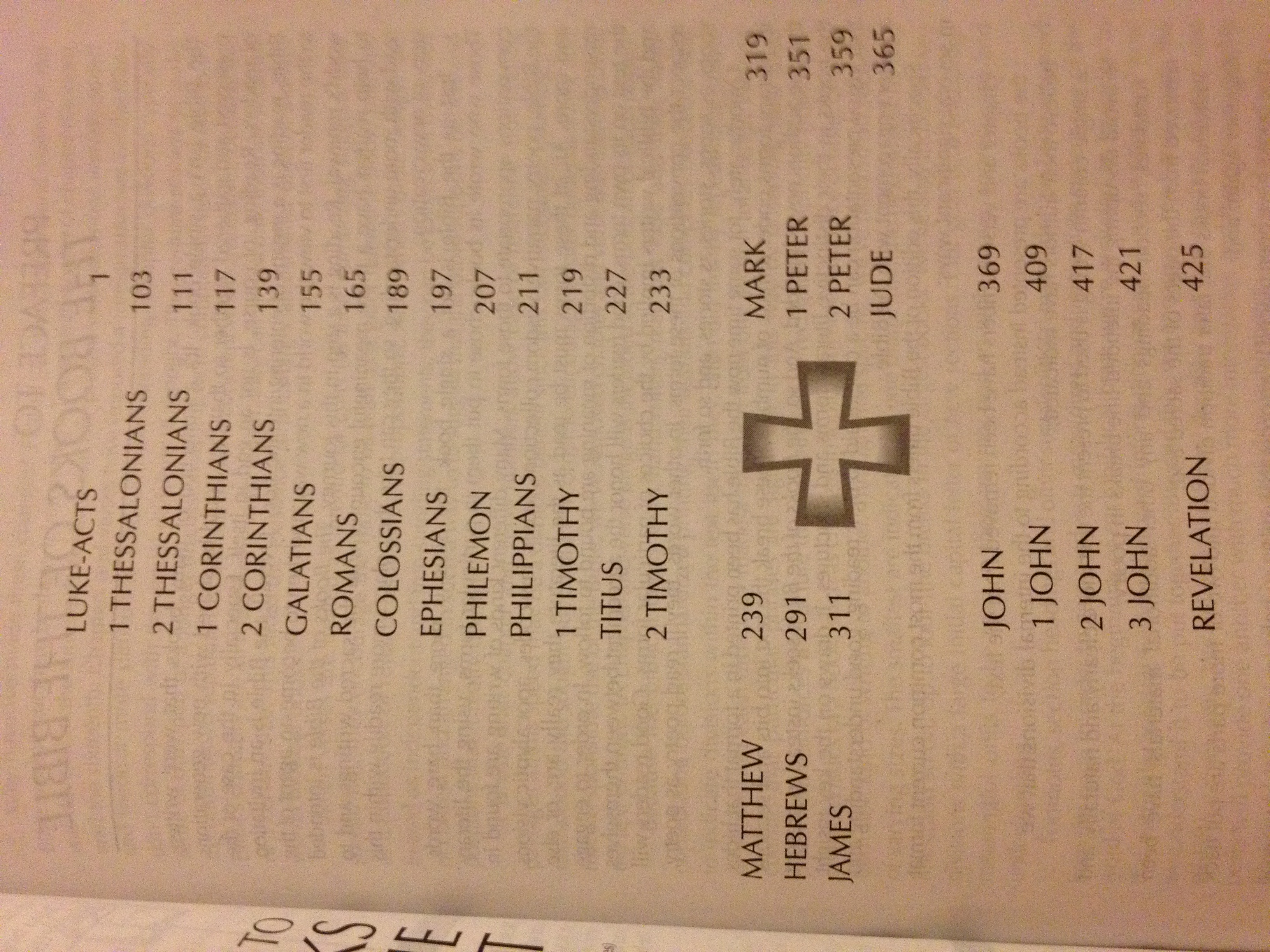
On Sunday evening, Greg came back from Winterfest, a huge youth event in Gatlinburg, TN.  We were glad to have him back and immediately celebrated by going out to McAlister’s with one of our gift cards.  On the way there, he was telling me about the weekend, which he very much enjoyed.  His glowingly positive reviews were briefly interrupted, however, when he paused to rant about one of the videos that was shown.  Apparently, this video accused the Bible of being too hard to understand, and placed the blame for its complexity on all the ways we’ve tinkered with it:  adding chapters and verses, for example, or putting Jesus’ words in red letters.  Greg was greatly perplexed throughout the video, and was even more annoyed when he was handed a Bible that was put together to rectify this alleged wrong perpetuated against Scripture.  This New Testament didn’t have chapters or verses, and the books of the Bible were put in a different order:

Greg was downright cranky over this innovation, which inspired me to launch into my diatribe against chronological and/or “harmonized” versions of the Bible.  We both ranted on for awhile, and then Greg summed up both of our viewpoints with the question,

“Why can’t we just let the Bible be the Bible?”

A few minutes later, we both started laughing when he raised the question, “And when did we get to be such cranky conservatives?”

Good question!

I will admit the irony in our viewpoints:  we get annoyed with innovations in the presentation of Scripture, yet our annoyance overlooks the fact that the very order of the Bible that we hold so dear is itself an innovation, put together during the Council of Carthage in 397 and 419*.  And while I found the Winterfest Bible’s order to be unnecessary, I have to admit that the arrangement of books made at least a little sense, according to my brief analysis of the table of contents.  Luke tells the story of Paul, and so Paul’s letters come after Luke/Acts.  Matthew, Hebrews, and James are the “Jewish” books.  Mark’s gospel is thought to be informed by Peter, and so Peter’s letters are listed after that book.  And all of John’s writings are together.  It’s not a totally absurd arrangement.  In contrast, the traditional arrangement of the New Testament lists the gospels first (fair enough), and then groups the epistles by author.  But they place the epistles within each authorial group…wait for it…in order from longest to shortest.  Longest to shortest!  Really?  We couldn’t order them by chronology…or content…or chronology…or theme…or chronology?  We went with longest to shortest?

I say all that to acknowledge that my own preferences for Scriptural presentation are just a little bit arbitrary.

Furthermore, my preferences for other Bible innovations are riddled with inconsistencies.  For example, here is a brief list of the types of Bibles that are okay according to Kim:

–Bibles geared toward certain ages or gender (i.e. children’s Bibles or men/women’s Bibles).

–Those Bibles that look like teen magazines (whatever gets them reading, amIright?)

–Most standard versions

Here is a brief list of Bibles that induce eye-rolls from Kim:

–Bibles geared toward certain interest groups (i.e. patriots, hunters, soldiers, couponers, etc)

–The Message

–Chronological Bibles

–NIV 2011 version

Now, see if you can spot the inconsistencies here.  Why are age/gender based Bibles, and even magazine Bibles okay, but not Bibles for interest groups?  And what’s with my intolerance with The Message?  It doesn’t even claim to be an interpretation, but a paraphrase!  I can read my kids heavily edited storybook Bibles all day long, but I’m going to turn my nose up to The Message?   Hmmm…let’s just say there’s a fair amount of sheer cantankerousness represented in these views.

But with the NIV 2011 and the chronological/harmonized versions, there is something deeper.**  It seems to me that both of those versions come with an unwillingness to let the Bible be the Bible.  I might be misunderstanding this feature of the new NIV Bible, but my understanding is that many of the pronouns were changed to become gender inclusive.  Now, I’m all for the inclusion of genders, believe me…but that’s not the language in which the Bible was written.  It’s just not.  It seems that in changing those pronouns, we are trying to improve upon the Bible.  To that, I say, let the Bible be the Bible.

Similarly, the Bible wasn’t told in a chronological story.  You can put the books roughly in order, but they will still overlap and retell the same story from different angles.  And that seems to be how God wanted it.  If He wanted to give us one seamless narrative, He would have.  But He didn’t.  And I have to have faith that there are four gospels for a reason.  And furthermore?  They. don’t. harmonize.  (Don’t believe me?  Take all four gospels’ versions of Jesus’ last week and try to put them into one narrative that doesn’t contradict itself or leave anything out.  I dare you.)***

But see, we want the Bible to be this way.  We want it to share our gender sensibilities and our preference for a seamless, coherent narrative.  We are in a period of history that values that things, so we want the Bible to value them, too.  I understand that, I do.  Believe me, there are times I want to get all Thomas Jefferson on the Bible and cut out the parts that offend me, like how women are unclean for longer after they have a girl baby, than a boy.  Or, you know, all the slaughter of whole populations, including women and children.  Or that vexing verse about women being saved through childbirth.  (I mean, really–what’s that about?)  But I can’t cut those things out…because they are in the Bible.

And…say it with me…I have to let the Bible be the Bible.  I have to let go of my desire for the Bible to function as a handy book of rules, or a science textbook, or a seamless narrative, or a Modern document, or a postmodern document, or a politically correct document…or even a book with all the answers.  (Believe me, I am generally full of questions after I read the Bible.)

Instead, I struggle to embrace the Bible for what it is:

The God-breathed story of God’s pursuit of man.

The God-inspired revelation of His Word, which is the person of Jesus.

The messy history of a sinful people who interacted with a God who spoke to their historical context.

The book of all the answers that I need.

I have to let the Bible be the Bible.

So, on a scale of 1-10, how cranky a conservative am I on this Bible thing?  Also, what are your views on what the Bible is or isn’t?  And are you also creeped out by the interest group Bibles, or do you think those are cool?  Inquiring minds want to know!

*Hmm, I always thought it was the Council of Nicaea in 325, but Wikipedia is telling me a different story(only the most intensive research is featured on this blog, folks).  You can do your own thorough research here.

**These thoughts represent my current opinions, but are certainly subject to change.  The first time I read through the Bible was using a chronological version, and I loved it (although even then, the editor’s assertion that he was putting the Bible “in its proper order” grated on me).  So clearly, my views on the presentation of Scripture have been evolving, and I have no doubt that they will continue to evolve.  But this is where I am right now.

***Greg would like it to be known that he has no problem with the 2011 NIV or The Message.  And I would like it to be known that I have no problem with the Winterfest Bible:).

The Fountain of Life

Your love, O LORD, reaches to the heavens,
your faithfulness to the skies.
Your righteousness is like the mighty mountains,
your justice like the great deep.
O LORD, you preserve both man and beast.
How priceless is your unfailing love!
Both high and low among men
find refuge in the shadow of your wings.
They feast on the abundance of your house; 
   you give them drink from your river of delights. 
For with you is the fountain of life; 
   in your light we see light.

–Psalm 36: 5-9

Yesterday, I was driving home from teaching.  I was alone in the car and listening to the radio, and all of a sudden, I heard the most heavenly strumming on a guitar.  I know nothing about music and notes and such, so I can’t tell you how complicated or intricate the notes were.  They sounded pretty simple to me.  And yet, they were just so beautiful.  They spoke straight to my soul.  You know how when things feel so good, they make you want to close your eyes?  Whether it is a soft breeze while you are totally relaxed, a bite of a surprisingly exquisite morsel of food,  the feel of a back rub, or a really good kiss, there is something in your instincts that tells you to close your eyes so that you can enjoy the feeling more.  That’s what I wanted to do when I heard those guitar chords; I just wanted to close my eyes, sigh deeply, and say, “Thank you, God.”  Unfortunately, I was driving, so closing my eyes would be unwise, but I still felt the deep, abiding peace wash over my soul.  And in that second, I was transported from the surface of my day’s tasks to the depths of enjoyment and fulfillment.

I think that the music was a gift from God.

And I think that sometimes we are scared of those gifts.

I know that I am tempted to live in fear:  fear of enjoying this life too much, of being too worldly, of living as a glutton and and a sinner in a lost and dying land.  I desire to be holy;  after all, that’s what God calls me to be.  I long to live for God completely, and not to be distracted by the things that would take my eyes off Him.  And of course, those desires are right and good.  Of course, those desires are God’s will for us.

Here is what I have found, however.  I have found that when I pursue God with all my heart, when I immerse myself in His word, and put my eyes and my heart on things above, I find that despite all of its darkness, the world is absolutely saturated with God.  It is, after all, His creation.  Thus, we can see Him all throughout it.  Because we are each unique in composition and background, different parts of God’s creation speak to us in different ways, but the common ground is that we can experience His presence in basic things, like nature, music, exercise, food, sex, dancing, playing, and being with people.   At their root, all of these things are God’s invention.  They are gifts He chose to give us.  Yes, they can all be distorted; our fallen nature and the “powers of this dark world” are masters at distorting God’s good and perfect gifts.  But I think it is an absolute shame when we allow our fear of distortion to cripple our sense of enjoyment.  When we do that, we allow sin and darkness to take away the good things that God tries to give us in this life.

Truth be told, I believe that a lot of our fear comes from our view of the Bible.  I think we sometimes try to make the Bible into something that it is not.  We make God’s Word to us into a book of rules instead of door that leads us into a life-giving relationship with our Creator.  We act like we still live in the time of Uzzah, and we use his story as a warning against deviating from the narrow way.  I have two thoughts about that.  The first is, we don’t live in the time of Uzzah.  We are not under the Law (and thank God for that, because I am in Leviticus right now in my daily Bible reading, and I cannot imagine having to slaughter that many animals on a regular basis).  And when we put ourselves under that “law of Uzzah,” we become fearful even of our own capacities for enjoyment.  We don’t trust our thoughts and feelings; after all, Uzzah was just trying to help, and look what happened to him!  And so even though we are told that we have God’s Spirit within us, and even though everything in us tells that there’s nothing wrong with fervently enjoying a succulent bite of salmon or a riff on a guitar or a piece of beautiful art, we still worry that somehow that enjoyment makes us worldly.  And to make matters worse, the law of Uzzah tells us that we can’t view those things as worship or a connection to God, because the only way we can worship God are in the ways that He explicitly prescribes.  I have actually heard more than one sermon making that very point!  It’s like we completely skipped the central message of the New Testament and are back under the Law again, like the book of Acts is the sixth book of the Law!  (And again, apart from the theological absurdity of that position, let me tell you as one wading through Leviticus that, on a literary level, there is no way those two books are parallel.  If I learned anything from the Torah, it’s that when God wants to spell out a bunch of rules, He does it very clearly.)  The irony is that in our fear of being worldly, we separate God from the things He uses to reveal Himself to us.  In doing so, we tell ourselves that we can’t experience God in those things.  And because we cut out God from them, we make them worldly.  The result is that we live compartmentalized lives where we “worship” and “commune with God,” in certain contexts, which leaves the rest of our lives–the stuff like eating and running and being outside and kissing and listening to music and playing games– to be experienced apart from Him.  How sad is that?  I don’t want to live one second apart from God!  I want every moment of my life to be lived in worship to Him!

Secondly, though, I don’t even believe that the “time of Uzzah” is what we think it was.  It is so easy to get overwhelmed by all of God’s many laws in the Old Testament, and to be terrified by God’s treatment of those who step out of line.  I am still working through my understanding of all that, but from my understanding of the New Testament, it seems to me that the point of all those rules was to show us that they didn’t work.  And even with all those laws in place, people still communed with God through the normal elements of their lives.  For me, perhaps the best thing to come out of the Old Testament is the example of David.  David messed up all the time (and not just the Bathsheba thing:  when you read his story, there are all sorts of lies and acts of deception mixed in with the good stuff).  And yet, David was called “a man after God’s own heart.”  It’s hard to pin down exactly why he received such a wonderful title, but my running theory is that David was a man after God’s own heart because he saw God in everything.  He saw God in nature, in music, in sorrow, in dancing like a crazy person.

Perhaps that’s why David described God as a fountain of life.  “In your light we see light.”  Even as a sinful man, David was able to see the light in nature and dancing and music and such because he was already immersed in God’s light.  And so perhaps those today who “walk in the light,” as John puts it, are able to see all the sources of light that are already around them.  Perhaps God’s light helps them to test everything, hold onto the good, and avoid every kind of evil.  Maybe the fountain of life that comes from God allows us to connect with Him in everything He gives us.

Thinking about David’s words about the fountain of life reminds me of James’ description of God’s gifts:  “Every good and perfect gift is from above, coming down from the Father of the heavenly lights, who does not change like shifting shadows.”  Today, I’m so thankful for the good and perfect gifts of sunrises and good music and homemade tomato soup and my son’s drawings.  I’m thankful that I don’t have to wait for heaven to get a drink from the fountain of life.

How do you experience God in this life?

(In case you were curious, the guitar riff in question was the first thirty seconds here.)

Update on my Love Life: Fighting

In 2012, my major “resolution” was to live a life of love.  I know myself well enough to know that I cannot simply will myself to be loving, and so this resolution is really a request for God to transform me.  I also know, though, that there are some things that I can do to try to realign my life with Jesus’ standards.  Here is a little “update” on my attempt at an Eph. 5:2 style “love life.”

You know that phrase, “I’m a lover, not a fighter?

That phrase doesn’t describe me.

Instead, this is what describes me:

Because I am a lover, I am also a fighter.

I am a lover of God, of my family, of my church, of the people in this world.  And I fight for what I love.  In some ways, my view of the world is…combative.  In some ways, I see life as one big struggle.  A brutiful struggle, mind you, but a struggle nonetheless.  And I guess it is because of that perception that “fighting” metaphors really resonate with me, especially ones where the struggle is against seemingly impossible obstacles.  Lost causes, if you will.

Maybe that’s why my college dorm room was decorated with quotes like this one:

“I wanted you to see what real courage is, instead of getting the idea that courage is a man with a gun in his hand. It’s when you know you’re licked before you begin but you begin anyway and you see it through no matter what. You rarely win, but sometimes you do.”  –Atticus Finch, To Kill a Mockingbird

Or why I literally tear up when I watch scenes like this:

Or why I get chills when I hear these words, from Winston Churchill:

We shall go on to the end, we shall fight in France,
we shall fight on the seas and oceans,
we shall fight with growing confidence and growing strength in the air, we shall defend our Island, whatever the cost may be,
we shall fight on the beaches,
we shall fight on the landing grounds,
we shall fight in the fields and in the streets,
we shall fight in the hills;
we shall never surrender…

Maybe that’s why my favorite movies are about gladiators and astronauts and cowboys instead of romances.  I guess those movies just speak more to my understanding of the world.

And maybe that’s why I have such a hard time with Jesus’ words in Matthew 5: 38-48.  I desperately want to follow Jesus and to take His commands seriously, but I just don’t understand commands that seem to tell you not to struggle, not to resist, the darkness around you.

I am coming to see, however, that the Christian life is not about laying one’s weapons down.  Instead, it is about trading in the weapons of the world for better weapons, God’s weapons.  And it is about recognizing our true enemy, and not mistaking our enemy for the civilians among which he hides.  My last post was an attempt to flesh those thoughts out using my understanding of the New Testament.  This post will be an attempt to flesh them out using my recent experience.

Since my recent experience deals with real people, I want to describe it in as general terms as possible.  In fact, the reason it has taken me so long to post it is because I have struggled with just how to portray it.  Here’s what I came up with:

A few weeks ago, a fellow soldier and I were on a mission of reconciliation.  Our goal was to use church resources to help reconcile some teens to God.  For most of our mission, we had what seemed to be success.  Relationships were built; messages of reconciliation were delivered and received; love was poured.  At the very end, however, things went downhill.  As leaders of this mission, we made a decision that we thought was best for the group.  This decision was not well-received, and abruptly, we found ourselves under attack by two people while we were driving home.  The attack was incredibly vitriolic and personal.  Weapons of this world were being hurled at us with bewildering ferocity.  I actually had the image of bombs raining down on us while the attack went on.  My fellow worker and I looked at each other in absolute shock.  Then, we both reached for the only weapon we were mandated to use:  love.

We both tried–oh, how we tried!–to use love the right way.  It is not a weapon that one is used to using in such a harsh attack, and honestly, there was some trial and error in trying to use it effectively.  This particular battle went on for what seemed an interminably long time.  Every kind and peaceful thing we tried to say was immediately dismissed and overpowered.  We really didn’t know what to do.  It almost seemed easier to capitulate, to give in to the rage.  But we both truly believed that it was the wrong thing to do, that it was truly not in the best interest of the people in question.  Since they were in our care, we became more and more convicted that we could not let them think that their strategy of rage and hatred was the way to succeed.  We had to show them a better way.  So we held the line.  Calmly, peaceably, we held the line.

Here is a confession, though:  I was physically shaking throughout the encounter.  Afterwards, my fellow soldier told me that she was, too.  It was as if we had a whole pile of grenades between us that our survival instincts were screaming for us to use.  In this verbal battle, we could win; we could fight fire with fire and demolish our opponents.  We were older, better with words, and frankly, we had the benefit of being right.  But those grenades would have taken out the bridges between us and the people we were trying to reconcile with God.  We would have burned them.  And we weren’t willing to do that, as much as a burned bridge sounded kind of tempting in the moment.  So we didn’t use the grenades, even though every instinct inside me told me to do it.  That’s why I was shaking:  it wasn’t from rage; it was from self-control.  Restraint.  Despite our mutual longing for grenades, we tried our best to use love.  We fumbled, and tried again, and then fumbled again, and then tried again.  In the end, it is even hard to say who won.  I ended it by reasserting my love for my two “opponents,” and sharing with them the good things that I wanted for them.  Both of them softened at the time, and one has since issued a heartfelt apology.  I haven’t seen the other.

I will say this:  I came away from the encounter exhausted, severely shaken…and mentally illuminated.  Finally, in ways that penetrated to the depths of my knowledge, I understood the idea of turning the other cheek.  Turning the other cheek does not mean surrender.  It does not mean that you don’t fight.  On the contrary, I don’t know that I have ever fought as hard as I did that night.  Instead, turning the other cheek is part of fighting with love.  That night, I saw that love didn’t protect my pride and feelings like verbal retaliation would have.  Instead, love left my pride and feelings very vulnerable, and they suffered as a result.  But when I chose to use love, I chose to let my pride and feelings suffer rather than compromise my mission.  And that was turning the other cheek.

I am not going to attempt to universalize that experience right now or to extract principles to apply in every situation.  I just want to let it be what it was:  an experiential lesson in turning the other cheek.  Like I said, I was exhausted when my mission was over…and yet, I also felt very, very…strong.  I felt like I had won the battle, although certainly not the war.  I went home with peace in my heart, and love in my soul.  In a weird way, I am even thankful for the experience.  It definitely served as an important lesson in my year of trying to live a life of love.  God taught me more about love in that one battle than I could have ever learned simply from reading Scripture.  That night, He took the Scriptures I had read and gave me a chance to apply them.  I pray that I did well, that I passed whatever test He might have been giving me.  I pray that I made God proud as a soldier in His army.  And I pray that the love we so clumsily tried to show that night will plant itself in the souls that were present and that it will stay with them as a picture of God’s love for them.

I know it will stay with me…

The Practice of a Happy Bedtime

Today, I am blogging as part of the “Practices of Parenting Carnival” held by Sarah Bessey at Emerging Mummy.  Even though Kingdom Civics is not a “mom blog,” I do view my parenting as one of my most important roles in God’s Kingdom.  Thus, when Sarah asked us to share one of our practices of parenting that makes the experience enjoyable, I couldn’t resist.  Enjoy!

EmergingMummy.com

“The Practice of a Happy Bedtime”

I have long held the belief that a child’s bedtime should serve the same psychological purpose as the last five minutes of a Full House episode.

Remember that show?  In the world of Full House, the first twenty five minutes were fraught with conflicts, misunderstandings, and zany hijinks…which would always be totally resolved and redeemed in the last five minutes of the show.  It kind of became a joke, the way everything was tied up with a nice little bow at the end.  If only real life worked that way, we thought…

…Well, I think there is a time that real life should work that way, and that time is bedtime.  No matter what craziness, chaos, heartache, or drama happens during the day, I want my children’s last thoughts at night to be that they are loved dearly, that they have people in their corner, and that everything is going to be alright.  Life can be tough on children, and we parents can’t always kiss all that pain away.  However, I have found that pouring in peace and comfort at the end of a day is invaluable for children.  In fact, I know that it is invaluable.  I know because that happy, affirming bedtime was my bedtime as a child.

Most of my childhood bedtime memories are all a blur of Bible stories and pleas for “just one more” chapter of whatever book we were reading, mixed in with hugs, kisses, rubbing noses, and “I love you more’s.”  But there are a couple of bedtime memories that really stand out to me, times when my life was filled with fear and disappointment…only to be redeemed at bedtime.  Both memories happened within the same general age range, somewhere between 10 and 11.  I know because of the house we were living at, and because I no longer slept in my brother’s room on his top bunk.  Instead, I slept in my pink explosion of a room, snugly under my ruffly comforter.

I know I was at least ten for the first memory because I had been baptized….and a dreadful realization had come upon me.  I realized that I did not love God.  Or, at least, I didn’t know if I did.  I did know that I loved my parents and my brother, and that my love for God did not compare with the feelings I had for them.  This thought absolutely wrecked me.  I really wanted to love God, but I didn’t know how to make myself feel the same way about Him that I did about my family.  And clearly, this lack of warm fuzzy love feelings meant that I wasn’t going to go heaven.  After all, how could one go to heaven without loving God??  My lack of “feelings” for God left me completely despondent.  What kind of person was I, who didn’t love God??  And more importantly, how could I ever confess this dark truth to my parents, who thought the world of me?  Man…it’s tough being a kid sometimes.  Thankfully, my mom knew that something was wrong, and it didn’t take much prying on her part before I burst into tears one night at bedtime.  In between sobs, I told her, “I don’t think…I’m going…to heaven.”  Startled, she asked why not.  “Because I don’t love God!”  I wailed.  Of course, by this time she was completely taken aback, but I remember that she gently tried to console me with the thought that, of course I loved God.  I tried to explain everything to her how I loved my family so much, and how I just didn’t think I loved God as much as I loved my family.  And everyone knows you are supposed to love God more than you love anyone or anything else.  You are supposed to love Him with all your heart and all your soul and all your strength and all your mind, after all!

I don’t know if my mom was trying not to laugh at this point, or if she was grieved at how much I was beating myself up.  I do know that she must have been at a loss of how to console a ten year old who thought she was going to hell.  After trying everything she could to convince me that I did love God very much, even if I didn’t realize it…she punted.  “You know,” she said, “I think there’s a verse in the Bible that says, ‘If a woman has love as small as a mustard seed, she will be saved.'”  [Update:  There’s not a verse in the Bible that says that].

I sniffled.  “Really?  It says that?”

“Yep,” my mom affirmed, “it sure does.”

[Update:  No.  No it does not.]

“Well…I do think I have at least that much love…”

“See?”  my mom said triumphantly, “Nothing to worry about!”

I felt like a huge weight come off my shoulders.  But I still had one question.

“It says that about a woman who loves God?  But what about a man?”

My mom just laughed and waved the concern away.  “It probably says something like, ‘He is to be praised.'”

I cracked up.  I love that moment when tears turn into laughter.  There is magic in that moment.  And there was peace, sweet peace in my soul, as well as joy and love.  After some more hugs and kisses, my mom tucked me happily into bed, visions of hellfire put off for another day…

My other great bedtime memory came after either the 4th or the 5th grade spelling bee.  I had won my class spelling bee and got to compete in the school-wide bee.  I really wanted to win.  My best friend at the time always won everything; she was always just a little smarter than me, a little better, a little prettier.  And because of that, I really had this hunger to distinguish myself.  Since I was a good speller, I thought that this was my chance to do it.

I will never forget the word I missed:  mystify.

To this day, I am mystified at how I could misspell the word mystify–and how I could misspell it so confidently!  See, when they called out the word, “mystify,” I immediately thought of “mist.”  As in, when you are mystified, it’s like a mist clouds your understanding.  I saw the picture so clearly, of a person confused, surrounded by a mist.  And so of course, I spelled it with confidence:

“Mystify.  M-I-S-T-I-F-Y.  Mystify.”

I was shocked when it was wrong.  Only when I left the stage to sit with the others who had been eliminated did it occur to me:  it wasn’t like mist, it was like mystery.  Mystery, Kim, not mist…mysteries, like the ones you love to read so much?  People are mystified by mysteries.  You. Idiot.

I had learned all about the importance of being a good sport, but inside, I was crushed.  Looking back, I think that was the first time I was genuinely depressed.  I remember trying to pretend like it was okay, that I was taking it all in stride, but the truth was, I was so, so sad.  I went to bed that night feeling that weight of sorrow.

It was funny that night, because it was dad who came in and sat on the edge of my bed, his weight pulling the covers more tightly around me.  We usually kissed dad before we went to bed; it was usually mom who came to our bedside to bid us goodnight.  But here was my father, big and important in his stiff, dark suit, smelling like business and tobacco and cologne and the world.  He cut an odd and imposing figure sitting on my pink, girly comforter, under which his 11-year old daughter lay in a heap of failure.  I was all ears.

“You know,” he started, “I was in a spelling bee once.  In second grade.”

It was always novel to picture my dad as a little boy.  I had no doubt that my father was one of the most important, powerful men in our city, if not the world, and thinking of him as having once been a little boy almost felt like knowing a secret weakness about him.

“I was excited, because I had never been in a spelling bee, had never won one.  I had never won anything at all, in fact, and I thought that here, finally, was a chance to win something.”

My heart was already starting to break in anticipation.

“We went through a few rounds, and then I got up, and heard my word:  women.  I was so happy because it was such an easy word.  And so, confidently I started…”

I knew it was coming, but I couldn’t quite believe there was ever a time that my dad could not spell, “women.”

“W…”

Oh, no.  I knew what got him.

“…I…

Oh, man.

“M-I-N.”

Both vowels!

And there it was.  My father, at one point, could not spell the word, women.  I couldn’t help it:  I laughed.  But it was truly a laugh in commiseration.  After all, I was in 4th grade and couldn’t spell mystify.  But there was something so heartening in the fact that I was not alone in losing a spelling bee.  And also, if my dad could come back from misspelling women to go on to become one of the most important men in the world…then surely there was hope for me, too.

On that raft of hope, I was able to float peacefully off to dreamland.

And…roll credits.

I love looking back on those moments.  In those special times, my parents were the Dragon Slayers, vanquishing fear and sorrow from my wounded soul.  I see now, though, that these rescues were simply the natural outgrowth of the time they put into every night to make sure that all was well with my brother and me.  They worked hard to keep us in a world full of love, peace, and joy, and that work was accomplished both through the normal routine of stories and kisses and through those rare crises.

And now, I get to build that sanctuary for my children.  I get to use the sacred routines of baths and stories, devos and prayers, kisses and whispers to create a layer of peace between them and the natural stressors of their young lives.  Being a child is tough sometimes.  My son’s dread of dealing with his grumpy art teacher is every bit as real and unsettling as the stresses in my life.  And that is where our happy bedtimes benefit both my children and myself.  It is a chance for all of us to let go of the failures and frustrations of the day, as well as all of the worries of tomorrow, and just remember how much we love each other.  All of the hugs and kisses and giggles and whispers remind us that life is good, even though it is not without its daily hurts and inconveniences.  And I have found, interestingly, that when I speak peace into my son’s troubled soul, the anxious child within me hears and is quieted, also.  We might be worried about different things, none of which are truly resolvable in the moment, but our soothing talks remind us that we are both loved, we are both blessed beyond measure, and we both always have people to come home to, people who absolutely adore us.

In that way, our happy bedtimes help to create a secure and peaceful world for both of us.
Life is Brutiful

Yesterday, as I was walking down the street to my car after teaching class, I had a thought.  The thought came as a migraine threatened, causing something behind my eye to pulse ominously.  The thought came as the pulsing increased, forcing me to scowl at the world in an attempt to block out the light.  It came as I passed a roaring construction site, crossed the street, told homeless George selling papers to have a good weekend, and noticed the brambles of dead vines  in the dormant patch of trees to my left.  The thought was this:

“Life is brutiful.”

I got that word from Glennon Melton over at Momastery.com.  She uses it to describe the intertwined brutal and beautiful nature of life, and she argues that since it is impossible to separate those two sides, the best thing to do is to embrace them both.  I could not agree more.

Take my headache, for example.  Like I alluded to in the last post, my headache came after almost a month of feeling bad, and I realized firsthand how consistent fatigue and illness can really depress one’s mood and turn them inward.  Take right now, I thought to myself.  I don’t care about anybody right now; all I can think about is my pounding head.  It is making me completely selfish.

OR.

Or, I thought, I can choose to let it teach me.  I can let it give me a sense of humor.  I mean, isn’t is just a little funny that I am walking past this incredibly loud construction site with a migraine?  Isn’t there some black humor in there?  I smiled to myself.  Life is brutiful.

Or, I thought, I can use my headache as a reminder that people suffer all the time, that people suffer without us ever knowing, and to be gentle with people who might be suffering.  I can let my pain awaken me to the suffering of others.  That thought prompted me to be extra nice to George as I passed by.  Life is brutiful.

Or, I thought, I can use my pain to help me find beauty in things that don’t normally seem beautiful.  Take this tangle of dead vines and trees.  They look so gray and ugly.  But are they really?  I looked more closely, and saw the intricacy in brambles, the delicacy of each individual vine…and I saw the promise of spring coming soon.  Life is brutiful.

You really can’t separate the brutal and the beautiful.  Even those moments that seem sublime get at least some of their joyous power from the black depths.

For example, yesterday at preschool, I was sitting outside in the van with Anna.  She requested that I roll down the window, because, in her words, “I just love feeling the breeze and the sunlight.”

It was truly a sublime moment watching her happily bask in God’s creation.  I promptly took a picture and posted that beauty to Facebook.  Surely, no darkness could be present here…

And yet.

The reason I obsessively record such moments, the reason I cherish each drop of heaven that comes from raising my two children is largely because of my precious brother’s untimely death almost three years ago.  The seismic shift that that event caused in my soul rocked me to my core.  It caused immense pain…but it also forever changed the way I view life and, particularly, motherhood.  It taught me, in a way far more profound than mere intellectual understanding, to savor every beautiful moment with my kids, to drink them up, to record them and revisit them often.  Now, would I trade that understanding in a second to have my brother back?  Heck yes–you bet I would.  But I don’t have that choice.  My only option is to embrace the brutiful.

This morning, I read over my 2012 prayer journal and was just about moved to tears over my January.  Reading over it, I realized how I really did spend most of it battling fatigue, illness, stress and even mild depression as a result of it all.  I really had no idea until I saw my daily entries, each pleading with God to help me feel better, to give me the energy to get through this day, to equip my inadequate soul to be a good teacher, a good minister’s wife, a good mother.  Besides the health issues, I realized what a big adjustment this year has been.  Less than a year ago, my son went to preschool eight hours a week, and my daughter was home full-time.  Just a few short months later, and my son is in kindergarten eight hours a day, and my daughter is in preschool three days a week.  Add to that a new house, a new state, a new church, and my first true job since my kids have been born…and it becomes obvious that I’m experiencing some growing pains.

But January was not simply hard; it was brutiful.  Because of the challenges, I also experienced some true spiritual highs.  I had healing and therapeutic talks with old friends, including a life-giving visit with my best bud from South Carolina.  I bonded with some wonderful sisters at my new church over some particularly transparent and open class discussions.  I was blessed by some of the most transcendent experiences with God’s nature, particularly His amazing sunrises, which He regularly used to pour peace and hope into my weary soul.  I had some incredible days with my children, since our greater separation compelled me to cherish every sweet second that they were at home.  My bond with my husband grew even deeper, as we once again teamed up through a tough time and established that we are not only spouses, we are BFF for life.

It was truly a brutiful month.

And now my mama is in town.  She regularly spoils us, and sometimes I admit I take it for granted.  But this visit, I am ready to kiss her feet.  My gratitude for her generosity, her love, and her thoughtfulness is overwhelming, in a way that it probably would not have been if my life had been sailing along smoothly.

One day, when I live in the fullness of God’s kingdom for eternity, life will be simply beautiful.  But for now, I thank Him for the brutiful. I thank Him for bringing beauty out of the brutal, for working all things for good, even as they cause us pain.  I thank Him for using our brutiful lives to draw us closer and closer to Him, so that finally, when the brutiful gives way to the beautiful, we will be right at home…

How has your life been brutiful?

Beyond Evangelical??

On Rachel Held Evans’ blog yesterday, she shared links to three articles that were all very interesting to me.  The first article, a blog post by an author named Frank Viola, was the most fascinating to me.  In his post, he breaks down young evangelicals into four major “streams,” or categories.  Out of interest, I clicked over and started reading.

The first stream was the Systematizers, and I could relate to them because they “seek strong discipline and order in their daily lives” and live “in quest for theological certainty.”  I could relate to those desires.  I no longer believe that I am going to find the systematic, theological certainty that I’m looking for, but I still want it.

The second group was the Activists.  I could relate to them because  they are “attracted to social causes like acts of mercy, social justice, helping the poor, caring for the environment, etc,” and I kind of am, too.

The third group was the Emoters.  I could relate to them the least, but I have become increasingly less skeptical to the idea of “supernatural encounters,” so that kind of connected me to them.

As I read about all three groups, though, I congratulated myself in not fitting neatly into any one category.  I felt proud of my ability to “think outside the box” and to make up my own mind.

Then I came to Category 4.

The “Beyond Evangelicals.”

I kind of think his whole post was skewed toward this category, as he talked much more about it than any of the others.  And also, the name of his blog is “Beyond Evangelical,” so there is obviously some sympathy there.  That said, I was blown away by how well this guy–a man that I had never even met–described me.  I found myself nodding, “yes,” to just about all of the characteristics of a “beyond evangelical.”  Here is what Viola wrote about this 4th “stream”:

*politically: tend to be apolitical, believing that the local ekklesia (body of Christ) is the new polis and the kingdom of God is the true government. Beyond that, their political positions are enormously diverse.

*appeal: believe that there has to be something more to Christ and the church than what the first three streams present.

*search: discovering and displaying Jesus Christ in authentic, deep, and profound ways.

*identification: Most have come out of one of the other three streams. They belong to no particular movement, tribe, or denomination. And they do not belong to any single expression of church. “Beyond Evangelicals” can be found in all church forms and structures.

“Beyond Evangelicals” are not seeking a theological system (stream 1). Concepts and ideas don’t appeal to them. They are seeking spiritual reality. They view Scripture as fully inspired and true, but approach it as a narrative rather than a system of propositional ideas.

“Beyond Evangelicals” are not seeking any specific cause (stream 2). Religious duty doesn’t appeal to them. They view “good works” as being the natural outflow of living by Christ. They regard pursuing Jesus Christ and seeking causes that are related to Him as being two different things.

“Beyond Evangelicals” are not seeking a supernatural experience (stream 3). They believe that the emotions (as well as the mind and will) can either reflect or hinder the work of the Spirit. One’s feelings are not synonymous with the Spirit’s leading. Miraculous demonstrations don’t appeal to them either, unless they supremely unveil and glorify Jesus Christ.

“Beyond Evangelicals” are in pursuit of a Person above and beyond ideas (stream 1), activities (stream 2), or feelings (stream 3). They emphasize God’s work in and throughthe human spirit, and believe that mind, will, and emotion are to be governed by the Holy Spirit.

“Beyond Evangelicals” want to know Jesus Christ in reality and in the depths. Yet they aren’t quietists or passive mystics. Outward activity is important, but it’s like fruit falling off a tree. It’s the natural result of living by the life of Christ.

Wow.  That’s me.  Apolitical?  Check.  Ekklesia as new polis?  Check.  Oriented around the Kingdom of God?  Check.  Seeking to “discover and display Jesus Christ in authentic, deep, and profound ways”?  Check!  People, that’s what this whole blog is about!

Now, like I said, I do think he kind of rigged it so that the reader would fit himself into this last category, and it’s not like I thought that I was the one who first started focusing on the Kingdom of God (I’ve kind of given credit for this resurgence of the Kingdom to Dallas Willard, who, in his 1997 book, The Divine Conspiracy, quotes many scholars views on the centrality of the kingdom to the gospel.  One such scholar ponders, “I cannot help wondering out loud why I haven’t heard more about it [the Kingdom of God] in the thirty years I have been a Christian…Where has the Kingdom been?”  Oh, buddy–it’s back.)

Anyhow, it is always interesting to see one’s worldview laid out so flawlessly by a complete stranger, and it makes me wonder, yet again, exactly how it is our particular views are formed.  Sociology is so interesting to me, especially when I see these kinds of trends in human thinking.

As for whether those views make me, “beyond evangelical,” frankly I have no idea.  Also, I don’t really care.  I believe in sharing the gospel with others, if that’s what you mean be evangelical.  But, I don’t really believe in doing it with tracts or with hellfire sermons.  But that’s not a unique belief, either.

Anyway, I just thought I’d share that interesting take on evangelicals in their 20’s, 30’s, and 40’s.  If you fit into that age category (and even if you don’t), I’d be interested in your thoughts on Viola’s analysis.

Which, if any, of the four streams best describes you?  Or do you find any fault with his choices of categories?